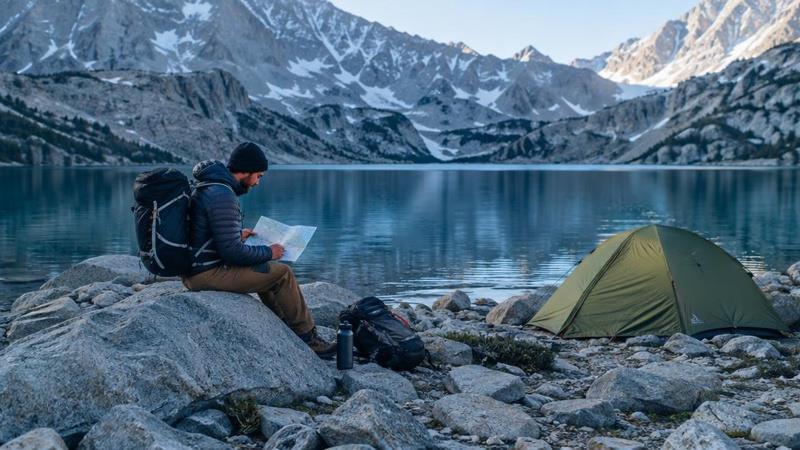
Backpacking is where planning becomes physical. Every extra item is weight on your hips for hours, and every skipped decision becomes a problem at 2 a.m. in a cold tent. The good news: the systems are learnable, and they improve fast.
Get the Base Weight Down First
Weigh everything once, then weigh it again after removing duplicates. Most first-time backpackers carry two of several things — two lighters, two knives, two water bottles more than needed. The goal is not ultralight obsession, it is carrying only what you will actually use.
Do at least one full-pack shakedown hike before your trip. Ten kilometres with your real load will reveal every fit issue, rub point and forgotten item while you can still fix it.
- Aim for 12–16 kg total including food and water
- Repackage food to cut packaging weight and volume
- Test water sources along your route in advance
- Keep the items you need at night in one known pocket
Food and Water Decide the Trip
Plan roughly 700–900 g of food per person per day for moderate trips, and favour calorie density over variety. Water is heavier than food, so carry capacity and a filter rather than litres you do not need.
What matters most in backpacking
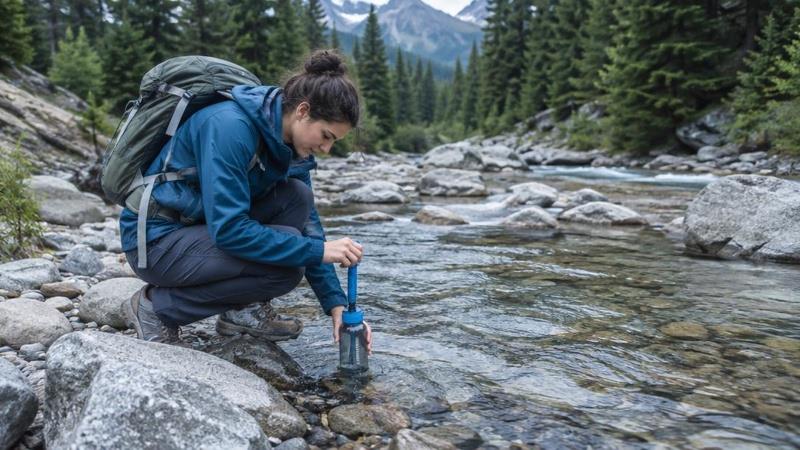
The useful way to approach “Water Purification: A Field Guide for Backpackers” is to treat it as a decision-making problem, not a shopping exercise. Filters, chemical drops and UV — how to combine them, how much water to carry, and where to source safely. The right answer depends on the conditions you expect, the time you have, and how much attention you can spare when the weather or terrain changes. A system that looks impressive on a gear list can still be awkward in the field. A simpler system that you understand and can repair is usually the one that gets used well.
That is the thread running through this guide. Start with the job the equipment or technique has to do, then remove anything that does not support that job. This keeps the advice practical for a first trip while leaving room for an experienced reader to refine details. It also makes the plan easier to explain to a partner, which matters when two people are sharing weight, navigation, or safety decisions.
Start with the conditions you will actually meet
Look at the full day rather than the best ten minutes of it. Check the forecast at the elevation, water, or trail section where you will spend the most time. Wind, wet ground, early darkness, heat, and a slow partner can all change the plan. Write down the one condition most likely to create trouble and decide what you will do if it appears. That short exercise is more valuable than another hour comparing specifications.
Then match the plan to your experience. A confident beginner can handle a demanding day when the route is familiar and the turnaround is generous; an expert can have a difficult day when a small detail was ignored. Build in time to stop, eat, dry a layer, or check the map. Good fieldcraft leaves room for those pauses instead of treating them as evidence that the trip is failing.
Make the system repeatable
The best habits are boring in the best possible way. Keep the same essentials in the same pockets, use one pre-trip checklist, and practise the small actions that become stressful when you are cold or tired. Set up the shelter, adjust the pack, tie the knot, check the filter, or secure the equipment at home. Familiar movements reduce the number of decisions you have to make after a long approach.
A repeatable system also makes it obvious when something is missing. Before leaving, lay everything out and compare it with the list. After returning, note what stayed unused, what failed, and what you borrowed. Do not remove a safety item just because one trip went smoothly. Instead, revise the list around real use: lighter packaging, a better repair, or a different way to organise the same reliable tools.
Test before you commit to a full day
Give the plan a small rehearsal. Take a short walk with the complete load, cook one meal with the actual stove, or spend an evening wearing the layers you intend to use. Pay attention to pressure points, damp insulation, difficult zips, and anything that requires two hands when one would be safer. These are cheap problems to discover close to home.
If the activity is shared, let everyone practise the part they will own. A partner should know where the water treatment lives; a child should know which adult to ask; a teammate should know the route and the turnaround time. Clear roles prevent the common situation where everyone assumes someone else packed the one item that matters. The rehearsal is not a performance. It is a chance to make the real day quieter.
Avoid the mistakes that cost the most energy
Most frustrating outings are not ruined by one dramatic error. They drift off course through a series of small ones: leaving late, starting too fast, carrying water in a difficult bottle, or waiting until the last light to set up. Watch for the first sign of that drift and correct it early. A ten-minute reset is far easier than trying to recover an hour later.
Do not copy another person’s kit without understanding their context. Their body, route, season, budget, and tolerance for discomfort may be completely different. Borrow the principle, not the exact product. Ask what problem an item solved, then decide whether you have the same problem. That approach protects your money and keeps your pack, vehicle, or kit from filling with solutions you never use.
Improve one variable at a time
When a trip teaches you something, change one thing on the next outing. If you replace the pack, the boots, the stove, and the route together, you will not know which change helped. Keep a short note after each trip: what felt easy, what was awkward, and what you would repeat. Over several outings, those notes become a personal guide that is more useful than a generic ranking.
This is also a good way to keep ambition in check. The goal is not to prove that you can tolerate more discomfort. It is to become more capable while keeping a margin for weather, fatigue, and other people. Progress may look like carrying less, turning around earlier, or choosing a better day. Those choices are signs of judgement, not a lack of commitment.
Bring the lesson home
At the end of the day, look after the equipment and write down the useful detail while it is fresh. Dry wet layers, clean the filter, inspect buckles and seams, and recharge anything that needs power. A five-minute reset means the next trip starts with a ready system rather than a mystery bag of damp gear.
Give credit to the people who made the day work, too. Thank a guide, ranger, volunteer, or partner; share a trail condition report when it is useful; and leave the site better than you found it. Outdoor knowledge grows through these small exchanges. That is how a single outing becomes a reliable practice, and how a practical guide like this turns into confidence the next time you head out.
This article was prepared for 2US Outdoor by Tom Braddock. Use the advice as a starting point, adapt it to local regulations and conditions, and make the conservative choice whenever the consequences of a mistake are serious.
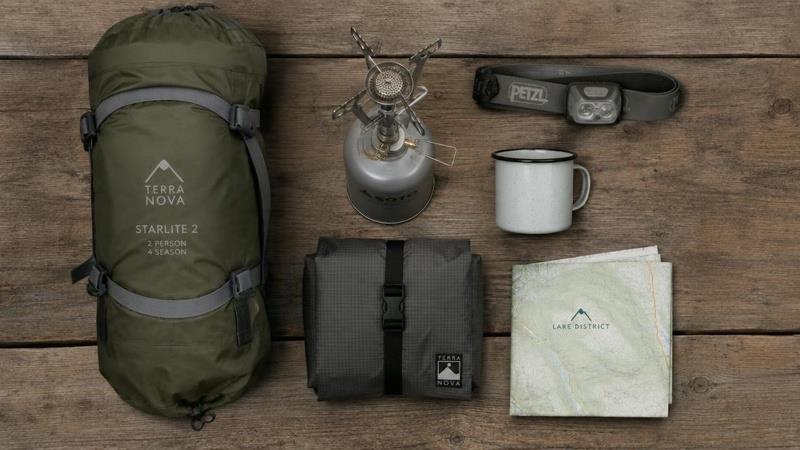
Multi-Day Core Kit
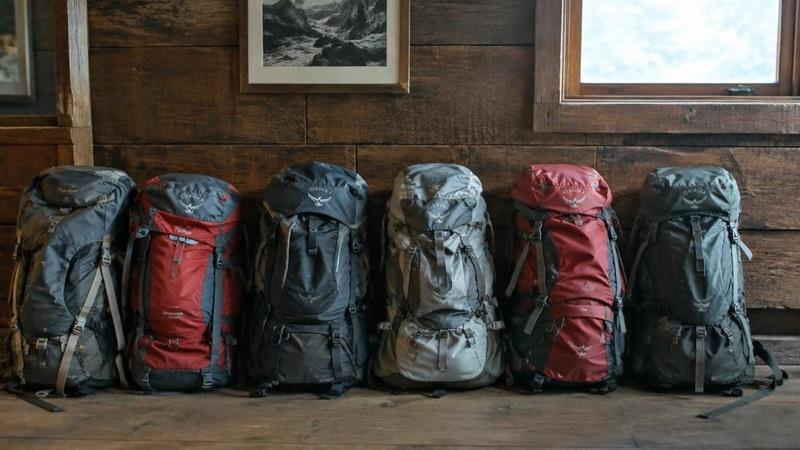
- Pack with a fitted hip belt
- Shelter, bag and mat
- Stove and fuel for the full trip
- Filter plus two bottles
- Repair and first aid kits
Your first multi-day trip should be short and close to an exit route. Confidence is built by finishing, not by ambition.